



Today, everywhere and in every sector, there is a buzz about three key areas: data management, digitalization, and artificial intelligence.
It is the need of the hour. Data is referred to as the new oil or gold, and everyone is flaunting their capabilities, trying to establish themselves as subject matter experts in every sector. Everyone is talking about digitalizing, from documents to processes, CRM, warehouse management systems, ERPs, and the list goes on. While some are already working on it, others are still confused about where to start, and the rest are clueless.
I am not a technologist or an expert in AI. I am writing this as a user point of view, with curiosity and a learning attitude, experimenting with these technologies.
Data management is a necessity for every business. The data is already present in the systems and ERPs. What is needed is technology that helps this data emerge and be utilized. The storage of data has become quite easy - with hard drives, mirrored storage, and cloud storage solutions. The days of storing data in physical form for tax or customs departments are more or less over. Everything can now be stored digitally.
Digitalization itself is not a new thing. It is all about implementing processes and sequences for better outcomes - data capture, record-keeping, and transforming information into documents. Tasks are done using systems with just a click of a few buttons.
Artificial intelligence (AI) goes a step further by minimizing the need for constant human interaction in digital systems. It makes complicated tasks simpler, translates documents into needed formats automatically, and checks the accuracy of data. It acts as a sounding board - when questions are asked, it assists in unravelling the answers.
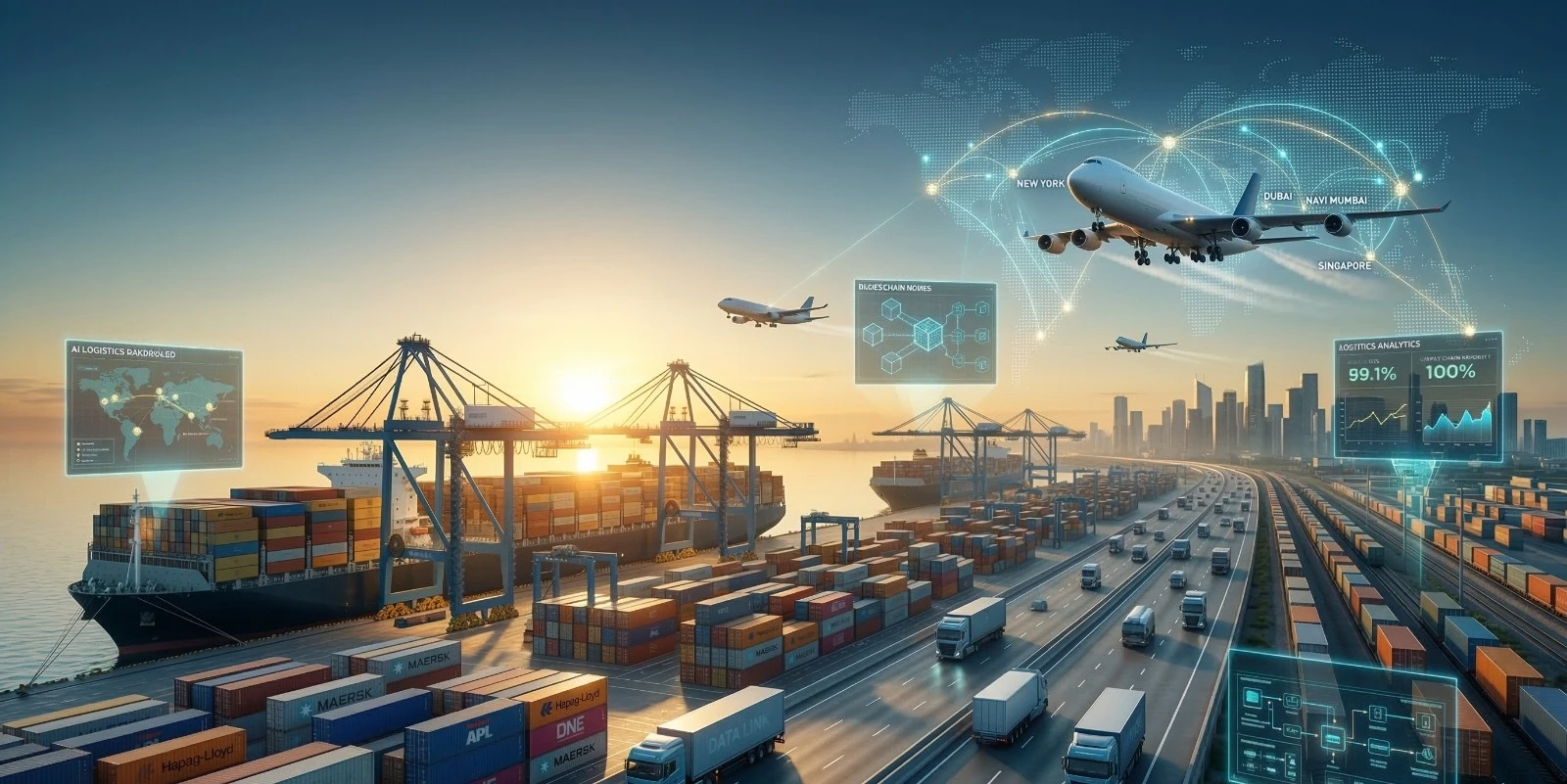
At its core, logistics needs an integrated system - one that ties customers, shipping lines or airlines, freight stations, ports, customs, transporters, and logistics companies together on one platform where the data moves seamlessly.
